Ski Goggle Safety Standards: The Complete Guide
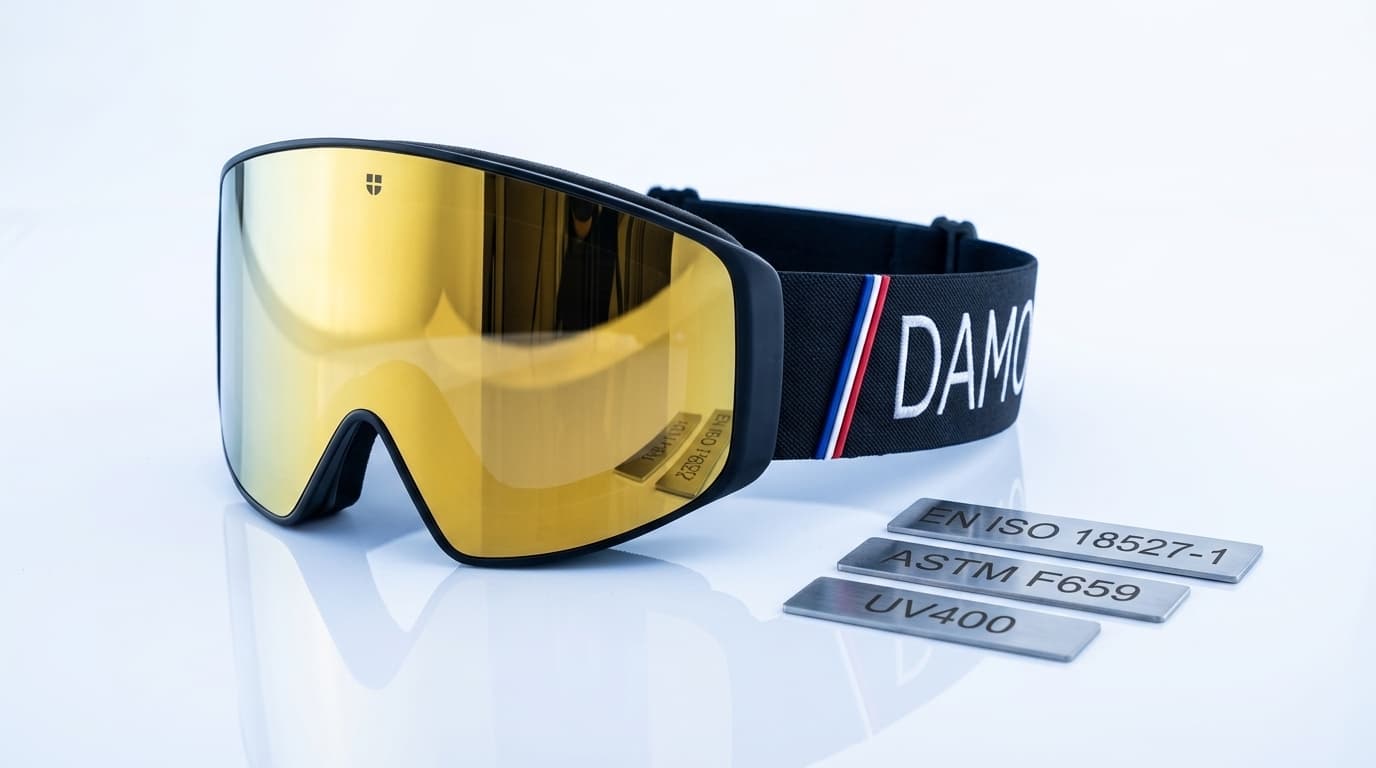
EN ISO 18527-1:2022, ASTM F659, UV400, CAT 1-4 filter categories: everything you need to know about the safety standards that regulate ski goggles in Europe and the US.
**The short version:** Ski goggles aren't a fashion accessory — they're Personal Protective Equipment (PPE) subject to strict standards. In Europe, the reference standard is EN ISO 18527-1:2022. In the US, it's ASTM F659. This article explains each standard, what they require, and how to read a goggle certification.
EN ISO 18527-1:2022 — The European Reference Standard
Adopted by the European Committee for Standardization (CEN), **EN ISO 18527-1:2022** is the harmonised standard for downhill skiing and snowboarding goggles in the European Union. It replaces the former EN 174:2001.
It covers:
- Plano (non-prescription) goggle lenses for alpine skiing and snowboarding
- Protection against UV, rain, snow, and wind
- Optical, mechanical, and thermal requirements
- Test methods for each parameter
As a harmonised standard cited in the EU Official Journal under PPE Regulation 2016/425, a manufacturer who demonstrates conformance to EN ISO 18527-1 benefits from a **presumption of conformity** to the regulation's essential health and safety requirements.
Key Requirements of EN ISO 18527-1
| Parameter | Requirement |
|---|---|
| Filter categories | S0–S4 per ISO 12312-1 |
| UV protection | UV-B transmission ≤ 0.03 × τv; UV-A ≤ 0.30 × τv (S0–S2) or 0.15 × τv (S3) |
| Impact resistance | 43 g steel ball, 130 cm drop at -10 °C |
| Anti-fog | ≥ 30 seconds without condensation (full goggle assembly) |
| Field of view | Min. 60° temporal, 30° nasal, 30° superior, 30° inferior |
| Uniformity | Variation ≤ 15 % between left and right lenses |
| UV aging | Transmittance shift ≤ 8 % after xenon exposure |
ASTM F659-10 — The US Standard
In the United States, **ASTM F659-10** is the standard specification for ski and snowboard goggles. Its requirements differ from EN ISO in several areas:
- **High-mass impact:** 500 g pointed projectile dropped from 50 cm
- **Low-mass impact:** 0.88 g steel ball at 45 m/s
- **Chemical and moisture resistance**
- **UV labelling requirements**
A goggle certified to the European standard is not automatically compliant with the US standard, and vice versa. If you ski in both regions, check for both certifications.
EN 174 — The Predecessor (Now Superseded)
**EN 174:2001** was the original European standard for ski goggles. It is now **superseded** by EN ISO 18527-1:2022 since its publication in the EU Official Journal.
**Key differences from the new standard:**
- EN 174 covered alpine skiing only; ISO 18527-1 includes snowboarding
- More detailed optical requirements in the new standard (uniformity, prism imbalance)
- Updated and stricter UV limits
- Mandatory anti-fog clause (absent from EN 174)
Goggles certified to EN 174 may still be sold, but new certifications must use ISO 18527-1.
Filter Categories CAT 1–4 (ISO 12312-1)
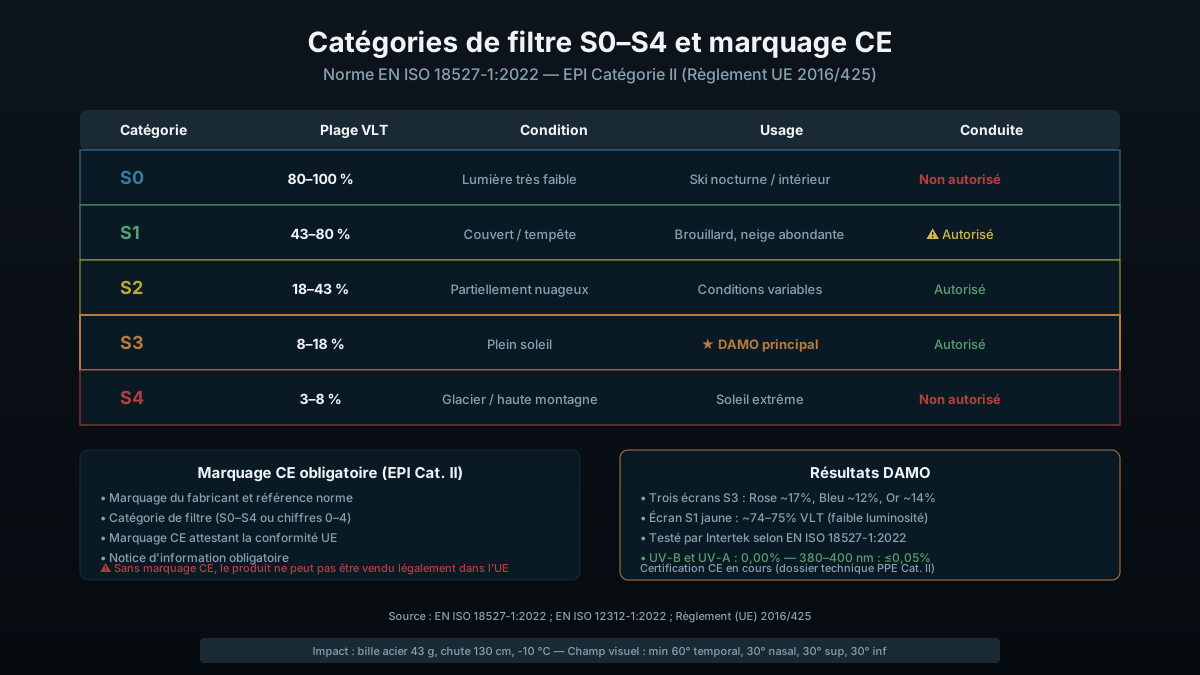
The filter categories are defined by **ISO 12312-1** (sunglasses for general use) and adopted by the ski goggle standard:
| Category | Light Transmission | Use |
|---|---|---|
| CAT 1 (S1) | 43–80 % | Overcast |
| CAT 2 (S2) | 18–43 % | Variable conditions |
| CAT 3 (S3) | 8–18 % | Full sun |
| CAT 4 (S4) | 3–8 % | Glacier, high mountain |
**Important:** Categories 0 (S0) and 4 (S4) are not permitted for driving — S4 is much too dark, S0 provides no solar protection.
UV400 — The Ultraviolet Protection Threshold
UV400 means the lens blocks 100 % of ultraviolet radiation up to 400 nm, covering both **UV-A (315–400 nm)** and **UV-B (280–315 nm)**.
**Why 400 nm?** UV radiation reaching the earth's surface extends to approximately 400 nm. Beyond that is visible violet light. A UV400 lens stops everything potentially harmful to the cornea, lens, and retina.
**Special consideration for skiing:** Altitude increases UV exposure by 30–50 % per 1000 m. Fresh snow reflects up to 80 % of UV rays. A skier receives significantly higher UV doses than a pedestrian at sea level — making verified UV400 certification critical.
PPE Category II — EU Regulation 2016/425
Ski goggles are classified as **Personal Protective Equipment (PPE) Category II** under EU Regulation 2016/425.
This means:
- The manufacturer must have the product assessed by a **notified body** (e.g. TÜV, SGS, Intertek)
- Conformity is attested by a **EU declaration of conformity**
- **CE marking** must appear on the product
- Products must include user information
Category II covers **serious** risks (eye protection against UV and impacts). It's stricter than Category I (minor risks) but less stringent than Category III (mortal risks).
The Impact Test — Steel Ball Drop
The most illustrative mechanical test is the **steel ball drop**:
- **Mass:** 43 g (bearing ball size)
- **Drop height:** 130 cm
- **Temperature:** -10 °C (polycarbonate becomes more brittle in cold)
- **Pass criteria:** Goggle stays on headform, lens is not penetrated, frame does not fragment
This test simulates impact from a projectile (gravel, ice, branch) at moderate speed. For high-speed impacts (fall, tree), the standard does not guarantee full face protection — it tests the goggle alone, not the entire head/eye area.
DAMO and Safety Standards — What to Know
DAMO lens samples were measured by the supplier (Pink.pdf, Dream blue.pdf, gold.pdf) to **ISO/DIS 18527-1:2022**. Separately, The Original was tested by **Intertek** (CNAS-accredited lab, Wenzhou) to **EN ISO 18527-1:2022**.
**Key results:**
- UV-B transmission: 0.00 % across all variants
- UV-A transmission: 0.00 % across all variants
- 380–400 nm transmission: ≤ 0.05 %
FAQ
**Q: What's the difference between EN 174 and EN ISO 18527-1?** A: ISO 18527-1 replaces EN 174. It adds snowboarding to the scope, tightens UV requirements, makes anti-fog testing mandatory, and refines optical measurements (uniformity, prism imbalance).
**Q: Must goggles sold in Europe be certified?** A: Yes. As Category II PPE, the manufacturer must demonstrate conformity and affix CE marking. Without it, the product cannot be legally sold in the EU.
**Q: Is ASTM F659 certification valid in Europe?** A: No. Europe requires EN ISO 18527-1. The two standards differ in test methods and criteria. An ASTM-certified goggle is not automatically compliant in Europe.
**Q: Is UV400 testing mandatory?** A: The standard mandates specific UV transmission limits — UV400 is the industry benchmark that exceeds these requirements. The "UV400" label itself isn't regulated, but the measured values are.
**Q: Do children need different standards?** A: The same standards apply (EN ISO 18527-1). However, size and field of view must be appropriate for a child's face shape. Look for goggles specifically designed for young skiers.
Sources
- EN ISO 18527-1:2022 — Skiing and snowboarding goggles — Requirements (https://www.iso.org/standard/62788.html)
- ASTM F659-10(2018) — Standard Specification for Ski and Snowboard Goggles (https://blog.ansi.org/ansi/standard-specification-ski-snowboard-goggles)
- EN 174:2001 — Ski goggles (superseded)
- EN ISO 12312-1:2022 — Sunglasses filter categories
- EU Regulation 2016/425 — Personal Protective Equipment (https://eur-lex.europa.eu/eli/reg/2016/425/oj)
- Intertek SHAH01697484 — Test report [internal supplier report]
- ANSI Blog — "ISO 18527-1:2021—Skiing and Snowboarding Goggles" (https://blog.ansi.org/ansi/iso-18527-1-2021-skiing-and-snowboarding-goggles)
- QIMA — "Sports Eyewear Testing – IAS and CNAS Accredited Labs" (https://www.qima.com/consumer-products/lab-testing/sports-eyewear-goggles)
- ZIONOR — "Introduction to International Safety Standards for Ski Goggles" (https://zionor.com/blogs/your-exercise-expert/introduction-to-international-safety-standards-for-ski-goggles)
**Related articles:** [How to Choose Ski Goggles](/en/blog/how-to-choose-ski-goggles) · [Cylindrical vs Spherical vs Toric Lenses](/en/blog/lens-shape-guide) · [UV Protection in Ski Goggles: The Complete Guide](/en/blog/uv-protection-guide) · [DAMO vs Julbo](/en/blog/damo-vs-julbo) · [How to Clean Ski Goggle Lenses](/en/blog/clean-care-goggle-lenses)
The DAMO goggle — two lenses included, €80 on preorder
Sealed double anti-fog lens, magnetic interchangeable lens system, and a free yellow fog lens. Free shipping in France.
Visit the shopRelated articles
2026-08-28
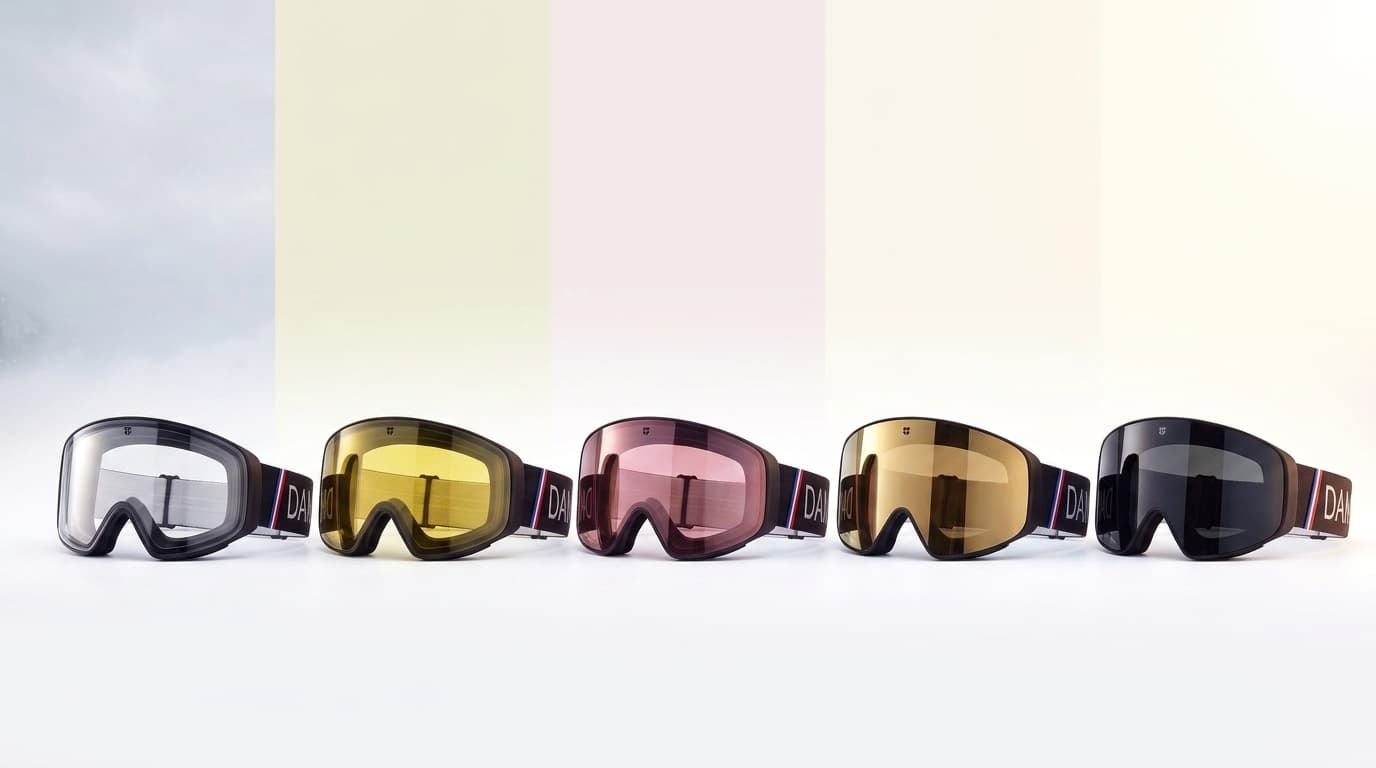
What Is VLT in Ski Goggles? Complete S0–S4 Guide
Everything you need to know about VLT (Visible Light Transmission) and S0–S4 filter categories for ski goggles: EN ISO 18527-1 standard, spectrophotometry, worked examples with DAMO lens values.
2026-08-28
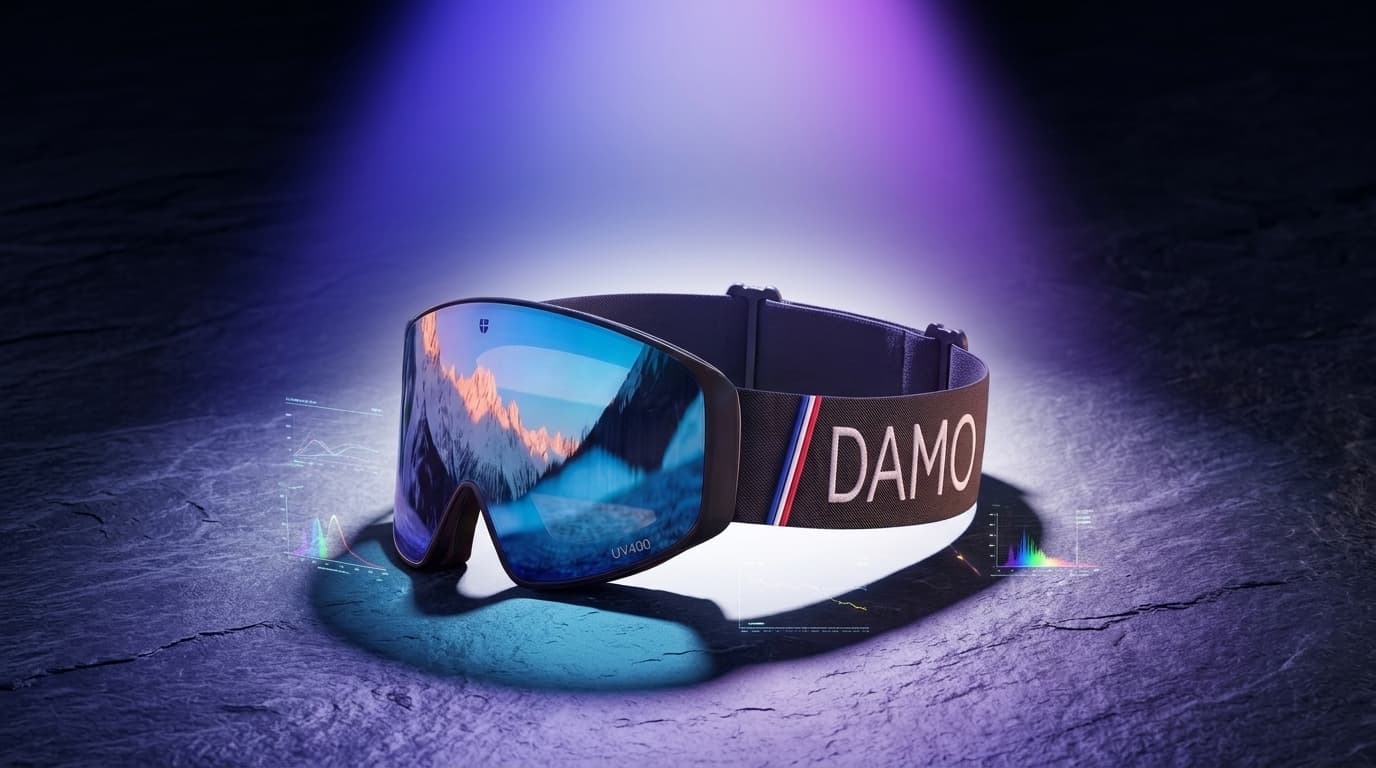
UV Protection in Ski Goggles: The Complete Guide
Complete guide to UV protection in ski goggles: UV400, ISO 18527-1 standards, altitude effects, myths debunked, and what to look for when buying.