UV Protection in Ski Goggles: The Complete Guide
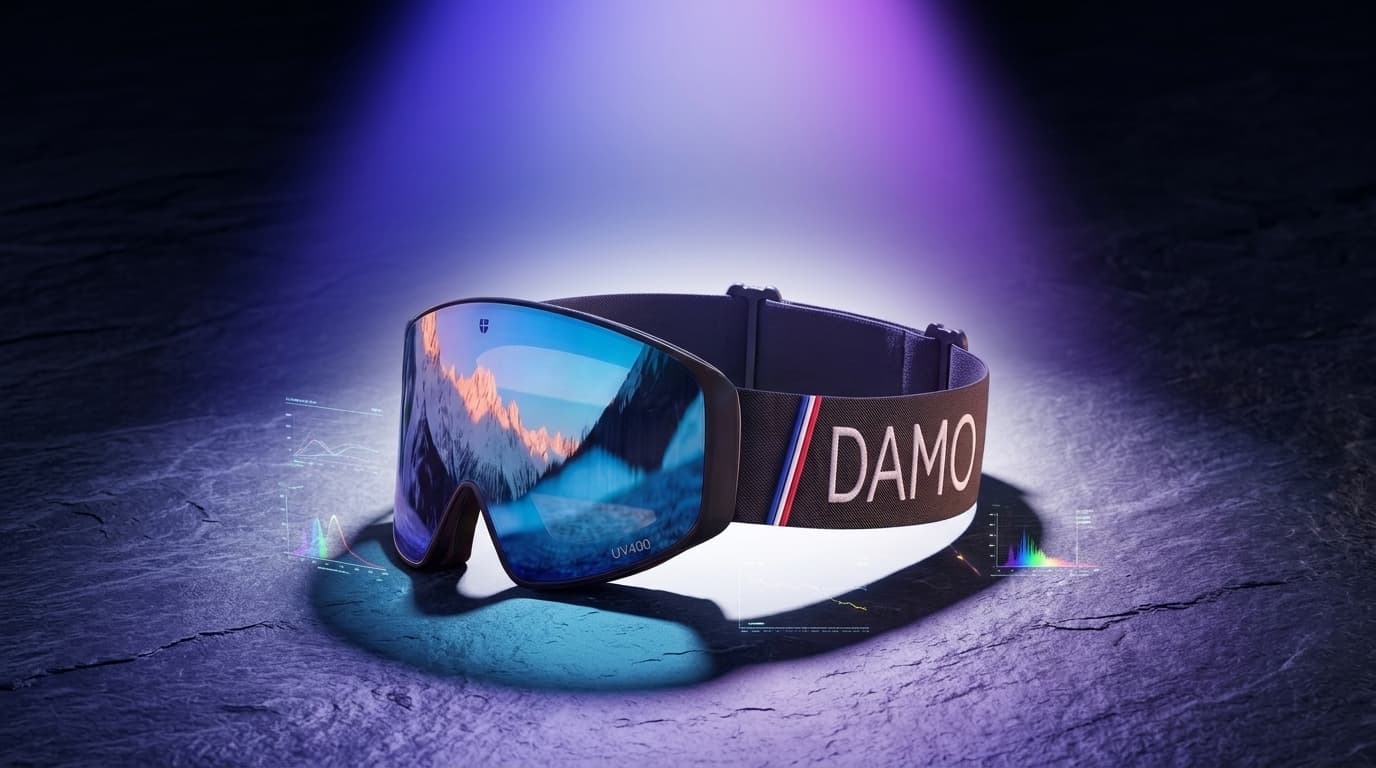
Complete guide to UV protection in ski goggles: UV400, ISO 18527-1 standards, altitude effects, myths debunked, and what to look for when buying.
“**Published by DAMO Gears** — Educational article based on current standards, published scientific data, and supplier optical data. ”
— Published by DAMO Gears
**The short version:** At 2,500 m elevation, you can receive up to 75% more UV radiation than at sea level. Yet many skiers believe a darker lens automatically equals more protection — it doesn't. UV protection depends on the lens material and coatings, not the tint darkness. The ISO 18527-1 standard sets strict UV transmittance limits for all lens categories. DAMO's supplier data shows 0.00% UV transmittance —
What Is UV400 Protection?
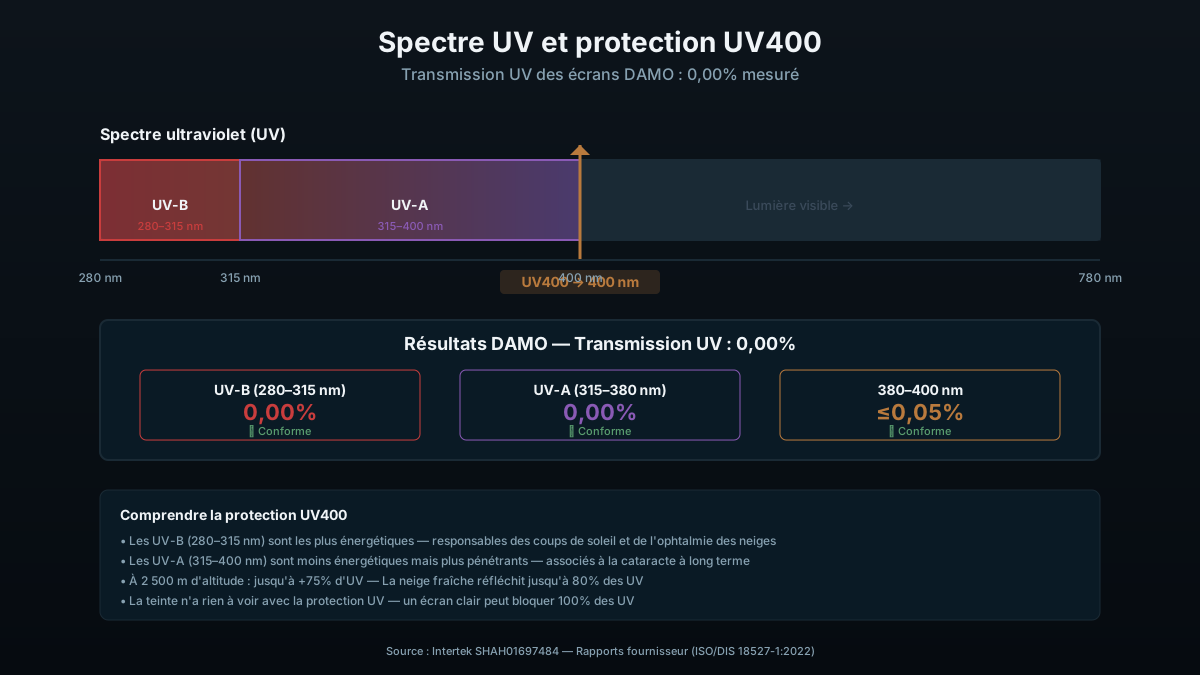
**UV400** means the lens blocks 100% of ultraviolet rays up to a wavelength of 400 nanometres. This covers:
- **UV-B (280–315 nm)**: the most energetic, responsible for sunburn and short-term eye damage (snow blindness, photokeratitis)
- **UV-A (315–400 nm)**: less energetic but more penetrating, associated with premature eye ageing and long-term cataract risk
A UV400 lens transmits **less than 0.5%** of light in the 380–400 nm band — the transition zone where the longest UV-A rays start to overlap with visible light. This is the baseline standard for any serious ski goggle.
What ISO 18527-1 Requires
The harmonised standard **EN ISO 18527-1:2022** defines UV transmittance limits for ski and snowboard goggles in the European Union. These limits are proportional to the lens's luminous transmittance (τv) — the darker the lens, the tighter the UV requirement in proportion:
| UV Band | Maximum Limit | Formula |
|---|---|---|
| **UV-B (280–315 nm)** | 0.03 × τv | For an S3 lens at 15% VLT: max 0.45% |
| **UV-A (315–380 nm)** — categories S0 to S2 | 0.30 × τv | For an S2 lens at 30% VLT: max 9% |
| **UV-A (315–380 nm)** — category S3 | 0.15 × τv | For an S3 lens at 15% VLT: max 2.25% |
| **380–400 nm** | 0.50 × τv (or 0.5% absolute for S4) | UV-visible transition band check |
These limits are measured using **spectrophotometry** with a standardised D65 illuminant (daylight, ~6,500 K). The lab scans from 280 to 780 nm and calculates the integrated transmission weighted by the eye's photopic sensitivity curve.
“**Source:** EN ISO 18527-1:2022 Table 1; ISO 18526-2:2020 (test methods).”
— Source:
The Altitude Effect: An Underestimated Risk
The atmosphere filters some UV before it reaches the ground. In the mountains, this protective layer thins out:
- **At sea level:** reference UV exposure
- **At 1,000 m:** 30–50% more UV
- **At 2,500 m:** up to 75% more UV than at sea level
- **At 4,000 m:** up to 120% more
Add to that:
- **Snow reflection:** fresh snow reflects up to **80% of UV** (compared to ~10% for grass, ~25% for dry sand). You receive direct UV plus UV reflected from below.
- **Cloud cover:** up to 40% of UV passes through clouds. An overcast sky does not protect you.
- **Time of day:** 60% of daily UV is received between 10 a.m. and 2 p.m.
**Practical implication:** a skier at 2,500 m on a sunny day can receive the equivalent of **3 to 4 times** the UV exposure of someone at sea level on a beach. UV protection is not optional — it is essential, in all weather conditions.
Myth: A Darker Lens Provides More UV Protection
This is one of the most dangerous misconceptions in skiing. **Lens tint (colour, VLT) has nothing to do with UV protection.**
- The tint selectively absorbs certain wavelengths of **visible light** (380–780 nm).
- UV protection depends on the **lens material** (polycarbonate, Trivex, NXT) and **surface treatments** — not the dye added for colour.
A clear (S0) lens can block 100% of UV if the material and coatings allow it. A very dark (S4) lens can let UV through if the material is untreated.
**The danger:** a dark lens without UV protection causes the **pupil to dilate**, allowing **more UV** into the eye than a clear lens would. You think you're protected because you see less light, but your eyes are actually receiving more UV radiation.
DAMO's Test Results
DAMO lens samples were measured by the supplier under ISO/DIS 18527-1:2022; The Original was independently tested by **Intertek Testing Services** (CNAS-accredited lab) to the methods of EN ISO 18527-1:2022. Supplier optical reports for the three launch S3 lens variants show the following:
| UV Band | DAMO Result (mean) | ISO/DIS Limit (S3) | Status |
|---|---|---|---|
| UV-B (280–315 nm) | **0.00%** | 0.03 × τv | ✅ Pass |
| UV-A (315–380 nm) | **0.00%** | 0.15 × τv | ✅ Pass |
| 380–400 nm | **≤0.05%** | 0.50 × τv | ✅ Pass |
The results nonetheless show 0.00% UV transmittance in the UV-B and UV-A bands, and ≤0.05% in the 380–400 nm transition band — well within the maximum permitted limits.
How to Verify UV Protection on Your Goggles
All ski goggles sold in the EU must comply with EN ISO 18527-1 or the earlier EN 174. Here's what to check:
- **Marking on the lens or frame:** the standard requires the manufacturer's mark, the standard number, and the filter category (S0 to S4, or digits 0 to 4)
- **"UV400" or "100% UV protection" label:** generally reliable for major brands, but check if it references a specific standard
- **Test report:** serious manufacturers publish or provide test results on request. An Intertek, SGS, or TÜV report is a strong signal
- **Absence of labelling:** if a manufacturer doesn't state UV protection level, consider the product uncertified
FAQ
**Q: Do all ski goggle lenses block UV?** A: Legally, yes — any goggle sold in the EU must meet the UV limits of EN ISO 18527-1. In practice, quality varies. Lenses certified by an accredited lab (Intertek, TÜV, SGS) offer documented assurance. Products without standard marking are a gamble.
**Q: Does UV protection wear off over time?** A: UV coatings can degrade with scratches, chemicals (sunscreen, cleaners), and prolonged UV exposure. A scratched or delaminated lens may lose some protection. This is a reason to replace lenses every 2-3 years with heavy use.
**Q: Do polarised lenses provide better UV protection?** A: No. Polarisation reduces glare (reflected light) but has no direct effect on UV protection. A lens can be polarised without UV protection, or non-polarised with excellent UV protection. The two are independent.
**Q: Do photochromic lenses protect as well from UV?** A: Yes — photochromic lenses from major brands (REACTIV, Phantom, Clarity Comp) all incorporate UV400 protection. The fact that the lens changes tint does not affect its ability to block UV.
**Q: What's the difference between ISO/DIS and EN ISO?** A: ISO/DIS 18527-1:2022 is the international reference standard for ski goggles. EN ISO is the version adopted by the European Committee for Standardisation (CEN) and harmonised in the EU. The technical requirements are identical.
Sources
- EN ISO 18527-1:2022 — Eye and face protection for sports use. Part 1: Requirements for downhill skiing and snowboarding goggles
- ISO 18526-2:2020 — Test methods — Physical optical properties of filters
- Intertek — SHAH01697484: The Original Test Report (EN ISO 18527-1:2022, S2 category, CNAS-accredited)
- Supplier optical reports — Pink.pdf, Dream blue.pdf, gold.pdf (supplier/internal, ISO/DIS 18527-1:2022)
- World Health Organization — Ultraviolet radiation: https://www.who.int/news-room/fact-sheets/detail/ultraviolet-radiation
- ANSI Blog — ISO 18527-1:2021 Skiing and Snowboarding Goggles: https://blog.ansi.org/ansi/iso-18527-1-2021-skiing-and-snowboarding-goggles
- REI Co-op — How to Choose Ski Goggles: https://www.rei.com/learn/expert-advice/goggles.html
- DAMO — Supplier data and 14-product-spec-lenses.md documentation
*Last updated: August 28, 2026.*
The DAMO goggle — two lenses included, €80 on preorder
Sealed double anti-fog lens, magnetic interchangeable lens system, and a free yellow fog lens. Free shipping in France.
Visit the shopRelated articles
2026-08-28
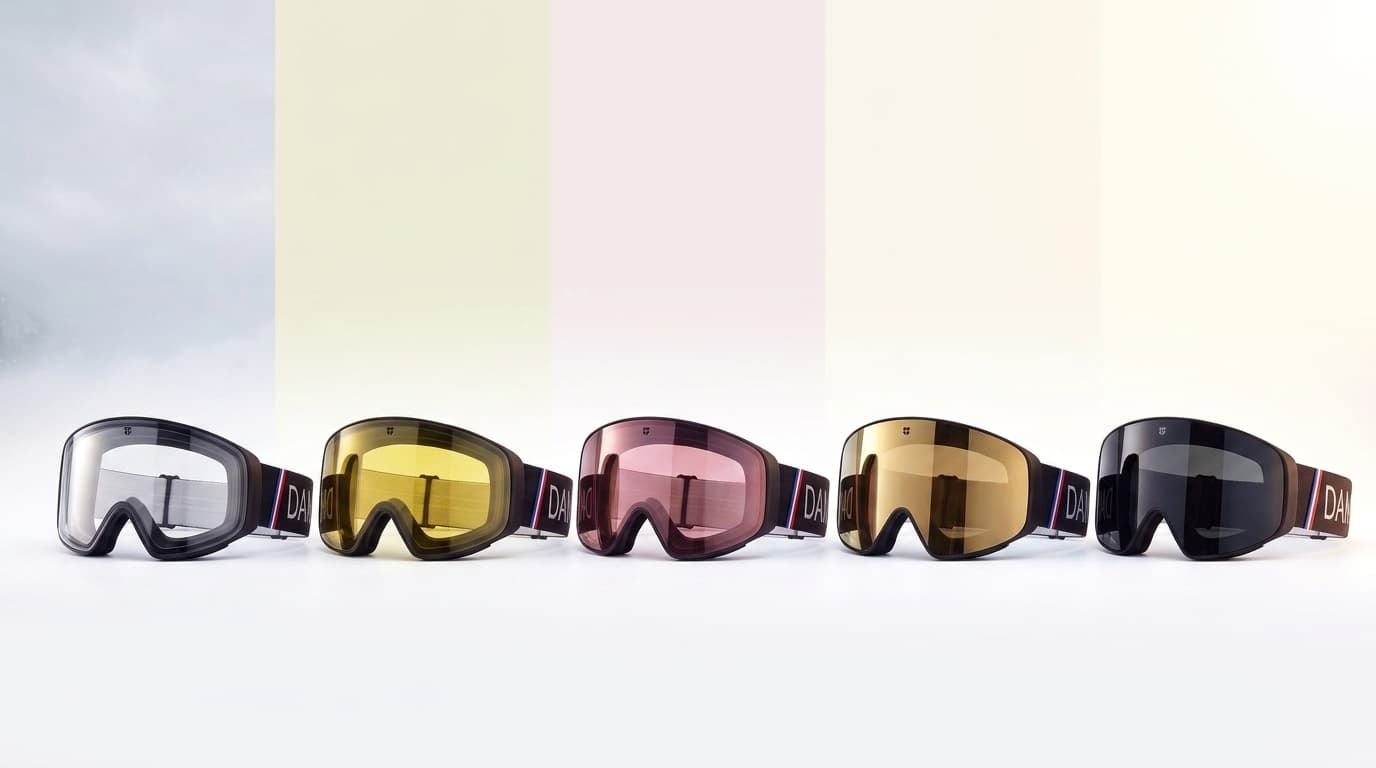
What Is VLT in Ski Goggles? Complete S0–S4 Guide
Everything you need to know about VLT (Visible Light Transmission) and S0–S4 filter categories for ski goggles: EN ISO 18527-1 standard, spectrophotometry, worked examples with DAMO lens values.
2026-08-28
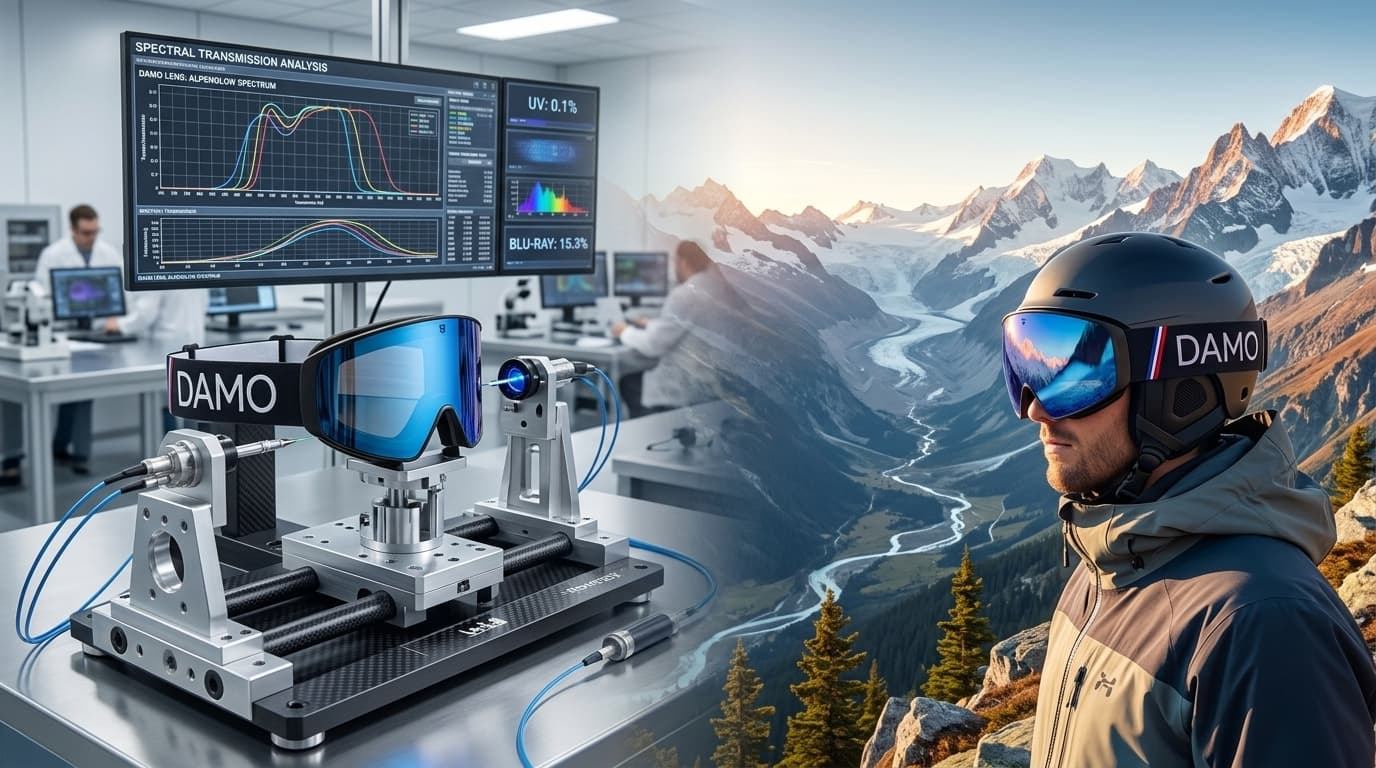
Lab Tests vs Real Slopes: What Certifications Don't Tell You
Lab tests prove safety. They don't prove a goggle will perform on the mountain. Here's what certifications really measure — and what they leave out.